
The Future of Healthcare with Prana AI: AI Facial Scanning, Smart Glasses, and Clinical Wellness
A conversation with Sumit Puri, CEO & Co-Founder of Prana AI, and Vicente Navarro, CTO of SindyXR
Published: WellnessJourney.LIFE
Guests: Sumit Puri, CEO — Prana AI
Explore: https://prana-ai.com/
What if your smartphone could tell you more about your health in sixty seconds than most people learn in an entire year of annual physicals? That is not a hypothetical — it is the core proposition of Prana AI, a comprehensive wellness platform built around AI-powered facial scanning technology. In this episode of the WellnessJourney.LIFE interview series, host Christopher Hill sits down with Sumit Puri, CEO and co-founder of Prana AI, and Vicente Navarro, Chief Technology Officer of SindyXR, to explore how the convergence of biometric intelligence, extended reality, and behavioral science is fundamentally redesigning what healthcare can look like when it is built around the patient — not the clinic.
The Science Behind the 60-Second Scan
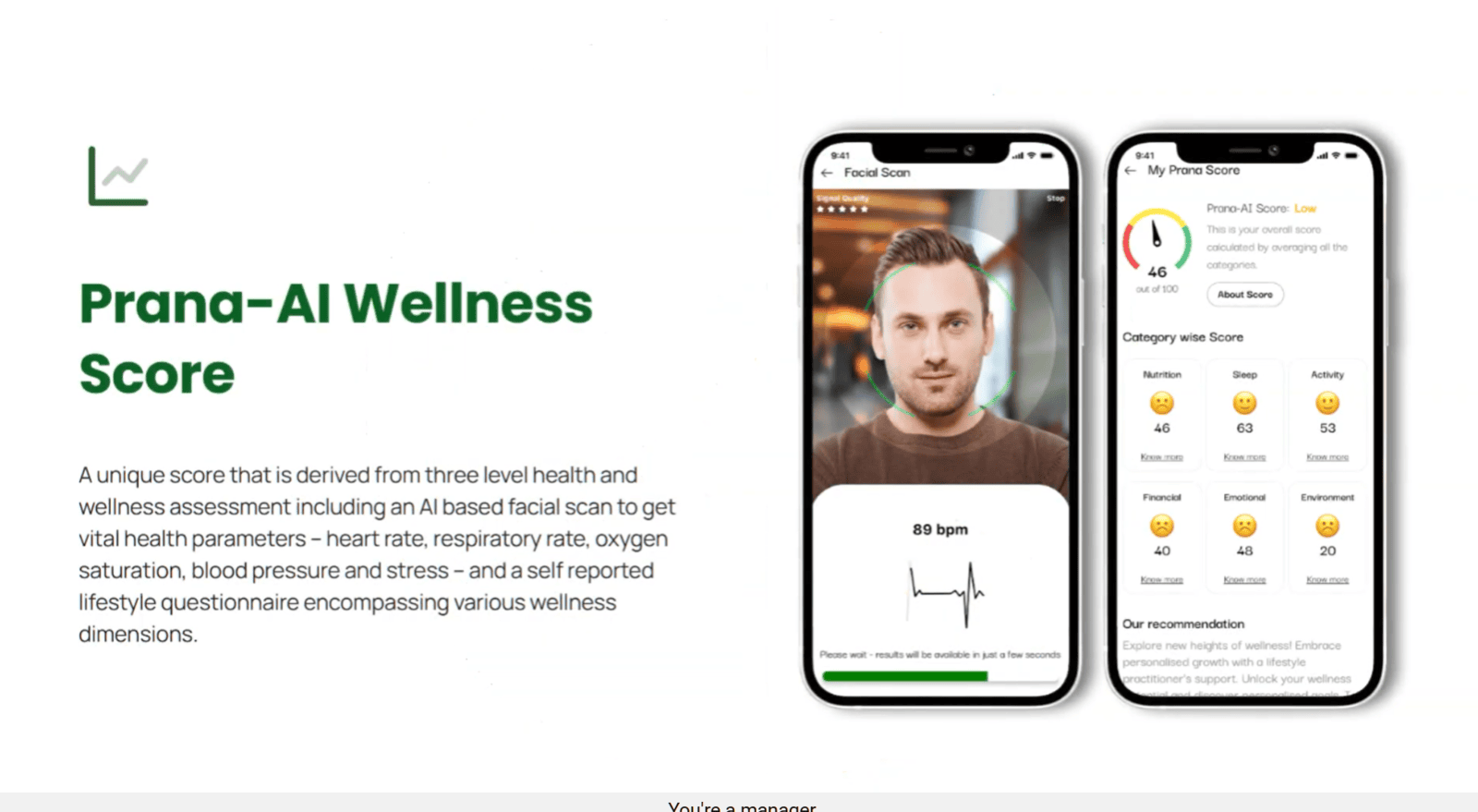
At the heart of Prana AI is a technology called remote photoplethysmography, or rPPG — a method of detecting the microscopic changes in facial skin color that occur with each heartbeat. These variations, invisible to the naked eye but clearly detectable by a smartphone camera and a well-trained AI model, carry a remarkable amount of physiological information: heart rate, respiratory rate, blood oxygen saturation, blood pressure, stress levels, and even early indicators of metabolic risk such as insulin resistance and elevated blood glucose. Puri described the platform's accuracy range as 85 to 95 percent — validated against clinical standards and continuing to improve as the model trains on more data. The entire analysis happens on the user's device via edge computing, meaning raw biometric video is never transmitted to a server. The user owns their data, completely and irrevocably.
"People shouldn't be bystanders in their own healthcare — they should be the pilots."
Prana AI's architecture layers this physiological baseline with a detailed lifestyle questionnaire covering nutrition, sleep, movement, and emotional health, and connects it to periodic lab work for users who want clinical-grade depth. The output is a personalized Wellness Score and a roadmap of habit-forming 'nudges' — small, science-backed behavioral recommendations delivered at the precise moment the platform's data suggests they will be most effective. If your stress peaks mid-afternoon, a breathing prompt arrives at 2 PM. If your heart rate variability signals poor sleep recovery, a wind-down reminder appears at 9 PM. This is behavioral science applied at the individual biometric level — a fundamentally different approach from any generic wellness app on the market.
Extended Reality, Sentiment Analysis, and the Future of Group Therapy
Vicente Navarro brought a complementary perspective from the SindyXR platform, where extended reality is being used to create immersive group therapy environments for mental health support, addiction recovery, and chronic disease management. SindyXR's AI layer performs real-time sentiment analysis during virtual reality sessions — monitoring voice patterns, avatar body language, and group dynamics to give facilitators a live picture of each participant's emotional state. The result is a therapeutic environment where a single skilled facilitator can meaningfully support a group of twenty participants across multiple geographies simultaneously, with AI augmenting their clinical perception in ways that would be impossible in a traditional in-person setting.
Both Puri and Navarro see smart glasses as the next major inflection point for healthcare technology — enabling clinicians to access real-time patient data without breaking eye contact, and allowing patients to receive supportive overlays and grounding tools in their real-world environment throughout the day. Navarro's vision is that smart glasses become as standard in clinical settings as the stethoscope — a tool that amplifies the practitioner's capabilities without replacing the human relationship at the center of care. Puri's vision is equally ambitious: a world where chronic diseases that currently arrive at diagnosis at stage three or four are caught at stage zero, because continuous biometric monitoring identified the physiological drift months or years before a crisis.
Democratizing Health Intelligence Globally
Perhaps the most sweeping implication of Prana AI's technology is what it means for global health equity. With approximately 3.5 billion smartphone users worldwide — including in regions with severely limited clinical infrastructure — the ability to deliver accurate, continuous biometric health monitoring through a device already in people's pockets represents a structural transformation in who has access to health intelligence. The gap between what a patient in a well-resourced urban clinic knows about their body and what a patient in a rural or underserved community knows has historically been vast. Prana AI's platform has the potential to close that gap in a way that no amount of clinic-building ever could. The future of health equity may run, in no small part, through the smartphone.
Watch the Full Interview
Watch now on YouTube: https://youtu.be/8KzZ3IaZDEQ
Subscribe to WellnessJourney.LIFE: youtube.com/@SindyXRWellnessJourney