
A conversation with Dr. Charles Cavo, Co-Founder & CMO of Pounds Transformation, in the SindyXR Wellness Leaders Webinar Series
Published: WellnessJourney.LIFE
Guest: Dr. Charles Cavo, CMO — Pounds Transformation · Board Advisor — SindyXR
The COVID-19 pandemic did not just disrupt healthcare — it accelerated a transformation that was already underway, collapsing a decade of incremental change into less than two years and forcing both patients and providers to rethink almost every assumption about how medicine could and should be delivered. In this edition of the SindyXR Wellness Leaders Webinar Series, Dr. Charles Cavo — co-founder and Chief Medical Officer of Pounds Transformation, and a clinical partner whose experience spans OBGYN, metabolic medicine, and preventive care — walks through eight trends that are reshaping the relationship between medical professionals and patients in the post-pandemic world. Together, these trends paint a picture of a healthcare system in genuine transition: more accessible, more personalized, more data-driven, and — when the right tools and the right clinical philosophy come together — more effective than anything that preceded it.
Trends 1 & 2: Telehealth Is Here to Stay — And Convenience Changes Everything
Dr. Cavo's pandemic story is one that many independent practice physicians will recognize: the day non-essential services were shut down, his newly opened third office — complete with a teaching kitchen — went dark, and he found himself having to master a technology he had barely heard of. What followed was the accelerated education that necessity produces. Telehealth, once treated as a fringe accommodation, became the primary delivery channel for a practice managing hundreds of patients with chronic metabolic conditions. The discovery that insurance reimbursement rates had actually improved, and that patients were showing up for virtual appointments at dramatically higher rates than for in-person visits — eliminating the 20-30% no-show rate that plagues most practices — transformed telehealth from a pandemic coping mechanism into a permanent clinical strategy.
"Technology pays for itself just by forcing patients to show up for themselves. Almost everyone shows up for a telehealth appointment."
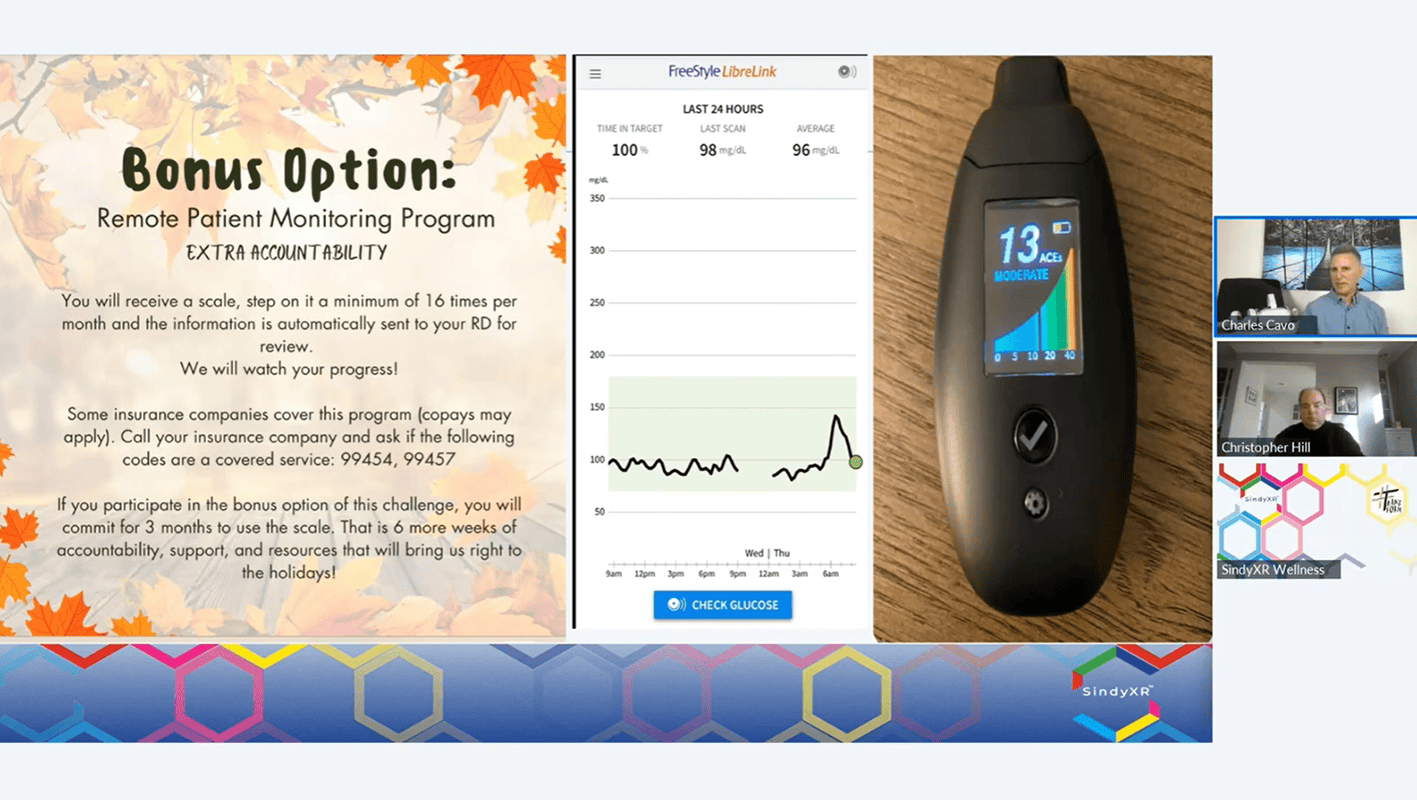
The hybrid model that has emerged — where in-person visits anchor clinical relationships and telehealth enables continuous touchpoints between them — combines the irreplaceable qualities of physical presence with the accessibility advantages of virtual care. Patients who cannot drive, cannot afford to miss half a day of work, or face significant physical limitations in traveling to appointments now have genuine access to the same clinical expertise as those without those barriers. The tradeoff Dr. Cavo acknowledges is real: the deep vulnerability that develops in a physical exam room, where a patient and clinician are truly present together, is harder to replicate on a screen. But the frequency of connection that telehealth enables — daily if needed, via remote patient monitoring and secure messaging — more than compensates for what is lost in any individual encounter.
Trends 3, 4 & 5: Personalization, Social Media, and the New Patient Relationship
The post-pandemic patient has changed in ways that go beyond their comfort with video calls. They are more engaged with their own health data, more willing to seek information outside the clinical appointment, and more expectant of a care experience that feels individualized rather than standardized. At Pounds Transformation, this has manifested in the growing role of private social media communities — Facebook groups with over 2,000 members where patients share recipes, support each other through difficult weeks, and celebrate progress in a peer environment that is monitored but not dominated by the clinical team. The dietary and behavioral change that used to require a physical office visit every three months to sustain can now be reinforced daily through the social architecture of an engaged patient community.
Dr. Cavo is careful to note that this approach requires ongoing attention to privacy and clinical boundaries — but his experience is that patients in well-managed communities are remarkably respectful of those boundaries, and that the clinical team's presence in those spaces as guides and resource providers is experienced as supportive rather than intrusive. The transition from provider-as-authority to provider-as-partner, enabled by more frequent and lower-stakes touchpoints, produces better compliance, stronger therapeutic relationships, and — critically — patients who feel genuinely invested in their own outcomes rather than passively receiving treatment.
Trends 6, 7 & 8: Group Therapy, Health Equity, and the Promise of VR and AI
Three of the trends Dr. Cavo identifies are particularly resonant for the WellnessJourney.LIFE community. Group therapy — the structured facilitation of patients with similar conditions talking with each other under clinical supervision — has converted him from a skeptic to an advocate. The quality of problem-solving that emerges from a group of patients sharing lived experience is, he observes, consistently superior to what any single clinician generates alone. Patients propose solutions drawn from their actual daily lives that a physician sitting in an office would simply not think of. The alchemy of shared experience, directed toward solutions rather than victimhood, is a genuine clinical multiplier.
Health equity — the use of technology to extend quality care to populations that have historically faced barriers of geography, mobility, stigma, or economics — is a trend Cavo sees as one of the most important long-term implications of the telehealth era. Patients who were too ill to travel, too embarrassed to be seen in a waiting room, or too economically constrained to take time off work are now accessing care and getting healthier. The leveling effect of a platform that requires only an internet connection and a device is not a minor operational convenience — it is a structural expansion of who medicine actually reaches. And emerging technologies — VR environments that allow patients to preview and emotionally prepare for medical procedures, AI tools that bridge the gap between clinical language and patient understanding, and remote monitoring systems that create continuous rather than episodic care relationships — represent the next wave of that equity-expanding potential.
The through-line of this entire conversation, and of the broader mission that both Pounds Transformation and SindyXR are pursuing, is the conviction that healthcare's future is not in any single technology but in the human relationship that technology enables. The goal is not a more efficient machine for processing patients — it is a more responsive, more connected, more deeply patient-centric system in which every person who needs care can access it, feels seen within it, and leaves it more capable of managing their own health than they were before. That is not a distant aspiration. For the patients at Pounds Transformation and the communities at SindyXR, it is what is happening today.