
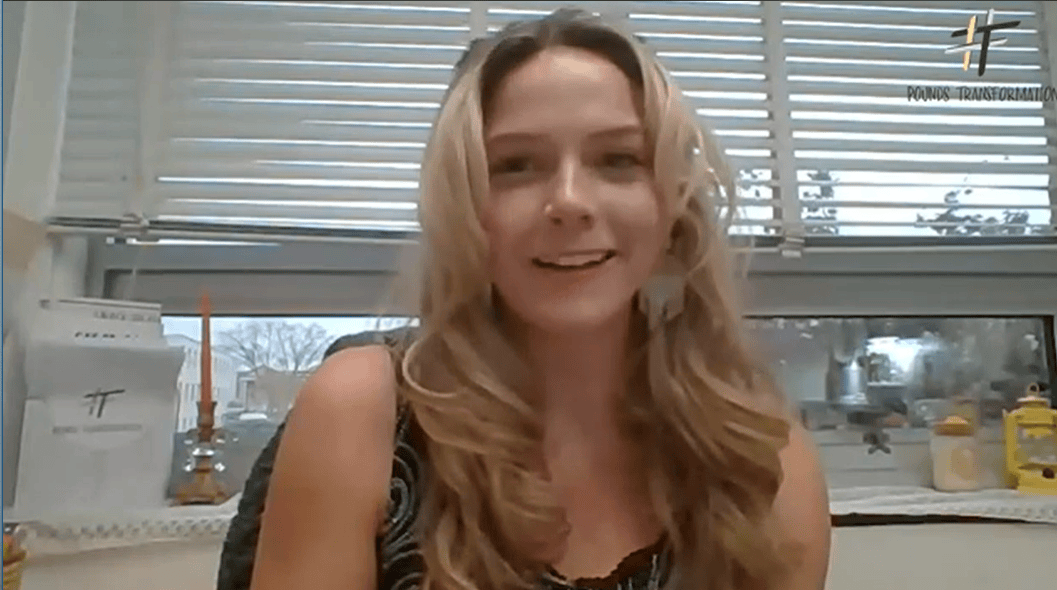
A conversation with Liz White, Registered Dietitian, Pounds Transformation
Published: WellnessJourney.LIFE
Guest: Liz White, Registered Dietitian — Pounds Transformation
Every year, the holiday season arrives with the same double bind: the social and cultural rituals we love most — family gatherings, festive meals, celebratory desserts — are in direct tension with the health goals we have worked hard to build. The predictable result, for millions of people, is a cycle of overindulgence followed by guilt, followed by restriction, followed by giving up entirely until January. Liz White, a registered dietitian at Pounds Transformation and a partner of SindyXR, has spent her career helping people break exactly that cycle — and in this episode of the WellnessJourney.LIFE interview series, she shares the framework that has made her the Maintain Don't Gain Holiday Challenge a standout program for patients trying to navigate the most nutritionally challenging month of the year with their progress — and their sanity — intact.
The Dietitian Who Grew Up on Kraft Mac and Cheese
One of the things that makes Liz White an unusually effective clinician is that her path to nutrition science was personal before it was professional. She grew up in a household of 1970s convenience food, began yo-yo dieting at age nine, and spent years cycling through restrictive plans that produced short-term results and long-term frustration. She lost weight more than seven times — four of those times by more than 50 pounds — without ever cracking the code of sustainable maintenance. That lived experience of the diet cycle, and the clarity it eventually produced about why restriction-based approaches fail, is the foundation of her clinical philosophy. She pursued a degree in nutrition science at the University of Connecticut not because she had all the answers, but because she needed to find them — and then dedicated her career to sharing what she learned with patients facing the same struggle.
"Aim for the scary gray area in the middle — not perfection. That is where long-term progress actually lives."
Her central insight is counterintuitive but powerfully supported by behavioral science: trying too hard is the enemy of sustainable progress. The all-or-nothing mentality — where a single deviation from the plan becomes evidence of total failure, and failure becomes license to abandon the plan entirely — is the mechanism that makes most diets collapse. Her alternative is not lowered ambition, but lowered pressure: instead of aiming for the perfect diet, aim for a little bit better than your baseline. Instead of meal plans that bear no resemblance to how you actually eat, make subtle, sustainable substitutions that fit your real life — your work schedule, your family situation, your relationship with cooking. The diet that lasts is the one that mimics what you would naturally do, adjusted just enough to move in the right direction.
Holiday-Specific Strategies That Actually Work
Applied to the holiday season, this philosophy produces advice that is both reassuring and genuinely practical. White's first recommendation is to set expectations honestly: there will be more carbohydrates in December. Accepting that reality in advance, rather than entering the month with the false confidence of a vow not to be tempted, dramatically reduces the psychological damage of any given holiday indulgence. When one serving of stuffing is anticipated rather than forbidden, it stays at one serving. When it is forbidden and then consumed anyway, it tends to become the opening act of an all-day binge.
Two specific behaviors she flags as particularly counterproductive: meal skipping and exercise compensation. Skipping breakfast and lunch before a holiday dinner in an attempt to 'save calories' reliably backfires — the resulting hunger by the time the meal is served makes portion control nearly impossible. White's prescription instead is to maintain a normal, balanced breakfast and lunch so that dinner is approached from a place of reasonable satiety rather than ravenous deprivation. Similarly, treating food indulgences as debts to be repaid with punishing exercise creates an unhealthy transactional relationship with movement that undermines both the enjoyment of activity and the sustainability of the eating pattern. Food and exercise should both be sources of care for the body, not instruments of punishment.
The Maintain Don't Gain Challenge — And Why 'Just Maintaining' Is Enough
The Maintain Don't Gain Holiday Challenge that White runs through Pounds Transformation each December is a direct expression of this philosophy. The goal is not weight loss. It is simply not gaining — holding the ground that participants have already won through the work of the previous months, and carrying it intact into the new year. Participants receive weekly menus with grab-and-go options for busy holiday weekends, seasonal recipes including protein-forward holiday classics and lower-sugar cookie alternatives, and Facebook Live sessions with White and the clinical team. A step challenge with a community leaderboard adds a social accountability layer during a month when physical activity typically drops sharply.
For the WellnessJourney.LIFE community, Liz White's message is one of the most genuinely liberating in our entire interview series: the holidays do not have to be a setback. With the right expectations, the right strategies, and the right support network, they can be a period of consolidation — a time to hold your gains, enjoy the season without guilt, and arrive in January ready to build on a foundation that is still intact. If you are navigating the holiday season and want a clinical team that understands the full complexity of sustainable nutrition, Pounds Transformation is accepting new patients at poundstransformation.com. And the full conversation with Liz White is waiting for you on the WellnessJourney.LIFE YouTube channel.
Watch the Full Interview
Watch now on YouTube: https://youtu.be/UIVirZfRUnE
Explore all six branches of wellness at WellnessJourney.LIFE